 |
|||
 |
|||
 |
|
|
|
 |
||||
 |
||||
|
|
|
|
|
Francisco Solano López
war wohl ohne Zweifel einer der wichtigsten Vertreter in der großen Welt der Comics; und (obwohl spät angefangen) ein Altmeister der erotischen Comics.
Seine Werke wurden und werden in unzähligen Ländern veröffentlicht und dank ihm, bekamen viele junge Talente eine Chance im harten Comic-Business.
López wurde am 26. Oktober 1928 in Buenos Aires geboren. Seine ersten Arbeiten fertigte er für den Columba Verlag; wie zum Beispiel "'Perico y Guillerma". Bei Columba traf er auch auf seinen späteren Partner und Freund Hector German Oesterheld. Mit Osterheld als Autor entstanden die ersten Geschichten wie "Uma-Uma" und "Bull Rocket". López wechselte später zum Verlagshaus "Frontera" das von Oestergeld gegründet wurde.
Erste größere Aufmerksamkeit erlangten das Duo López und Oesterheld mit den Geschichten El Eternauta. Die eigentlich "simple" Science-Fiction-Geschichte über außerirdische Invasoren war eine intelligente Anspielung und Kritik auf die Probleme im eigenen Land.
"El Eternauta" wurde erstmals im Heft Hora Cero im September 1957 veröffentlicht. Das exzellente Design von López und die allegorische SF-Geschichte von Oesterheld transportierten geschickt verpackt die täglichen Probleme - wie Militärdiktatur und soziale Ungerechtigkeit - in Argentinien sowie im Nachbarstaat Chile.
Sehr bald wurde die Regierung auf den Comic aufmerksam und López mußte nach Spanien fliehen. In Madrid konnte er dank des S.I. Studios Madrid für die englischen Fleetway-Verlage arbeiten. Ende 1959 zog er näher zu seinen Autoren, die in London saßen.
Für Fleetway entstanden eine Fülle an unterschiedlichen Arbeiten. So zum Beispiel:
Wie konnte ein Mann allein - in so kurzer Zeit - nur so viele Comics zeichnen? Nun, er konnte es nicht. López nahm nicht ohne Hintergedanken so viele Projekte an. Durch die schlechte Wirtschaftslage in seinem Heimatland verloren viele gute Zeichner und Studienkollegen ihre Jobs. Die versorgte López mit Arbeit. Durch sein eigenes Studio in Buenos Aires fanden so unter anderem Ramiro Bujeiro, Tibor Horvath, Silvia Lechuca, die Schiaffino Brüder, Nestor Morales, Julio und Jorge mit dem López in den frühen 1950ern an "Bull Rocket" gearbeitet hat, wieder Arbeit. López lieferte meist nur noch die Bleistiftzeichnungen. Die Tusche und Kolorierung übernahm "das Studio" für ihn.
1974 kehrte López nach Argentinien zurück um wieder für seinen alten Verlag Columba zu arbeiten; doch sein Freund Oesterheld überredete ihn, mit ihm am zweiten Teil von "El Eternauta" zu arbeiten. Im selben Jahr entstand auch der leicht erotische Science-Fiction-Comic Slot Barr mit Autoren-Star Ricardo Barreiro. 1976 brannte sein Studio in Argentinien auf mysteriöse Weise ab. Ein Opfer der Flammen wurden unter anderem 12 Ausgaben von "Slot Barr" und einige Zeichnungen für "El Eternauta". Dies nahm López zum Anlass zurück nach Madrid zu ziehen. Dort verhandelte er mit den italienischen Magazinen LancioStory und Skorpio über eine Veröffentlichung seiner Serien "El Eternauta" und "Slot Barr".
1984 erschienen Arbeiten von ihm auf dem amerikanischen Comic-Markt (Dark Horse und Fantagraphics). Mit Ricardo Barreiro produzierte er "El ministerio" und "El televisor", sowie mit Autor Carlos Sampayo für den italienischen Markt die Polizeigeschichten "Evaristo". Weitere Veröffentlichungen dieser Zeit: "Razorguts" wieder mit Autor Ricardo Barreiro, "Burial of the Rats", "Corpses in balance" und "Death is always go" (Frankreich 1985/86), "Kidnapped" mit Jim Woodring und Justin Green (1997/98).
Nicht unerwähnt bleiben sollte die gelungene Adaption des Classic-Horror-Films "Freaks" von Tod Browning, die López zusammen mit Jim Woodring gestaltete; erschienen bei Fantagraphic, USA und bei El Vibora, Spanien.
In den 1990ern wurde López endlich "Hardcore"!
Eros Comix veröffentlichte im Zuge der "The Young Witches" Popularität auch seine "Slot Barr" Arbeiten unter dem Titel Peter Kock. Mit "Hardcore" haben die "Slot Barr"-Geschichten aber nichts zu tun. Die Eros-Veröffentlichungen wurden lediglich mit expliziten Illustrationen von López am Ende der Hefte auf "Hardcore" getrimmt.
López erhielt beim "Barcelona Erotic Salon" den ersten Preis als "Bester erotischer Autor"; sowie den "Diario de Aviso's Preis" als "Bester realistischer Zeichner".
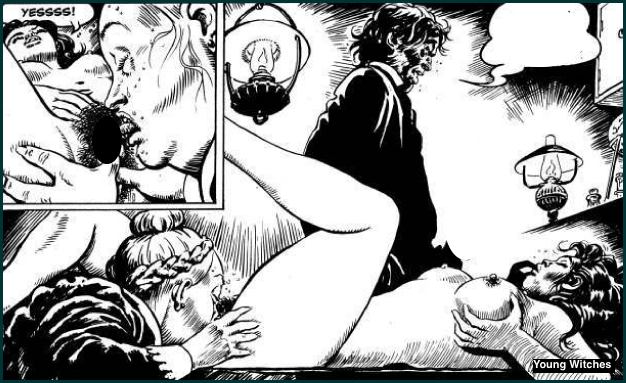
Die "The Young Witches"-Serie lebt durch den reichhaltigen Erfahrungsschatz von López für Stil, Anatomie und Layout. Dazu kommt die kraftvolle Erzählweise des erfahrenen Autors R. Barreiro; der die Serie ab Band 4 an Kollege Pol weitergab. Die Geschichte spielt im späten 19. Jahrhundert und vermischt fiktive und real existierende Berühmtheiten jener Zeit, wie Sigmund Freud, Sherlock Holmes oder "Jack the Ripper" (in Band 2) mit einer spannenden Geschichte um die Halbweise Lilian Cunnington und ihrer Aufnahme in ein "Hexen-Zirkel"-Internat (Band 1).
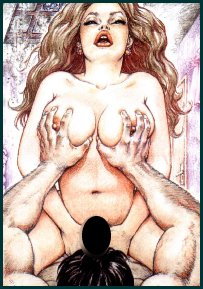
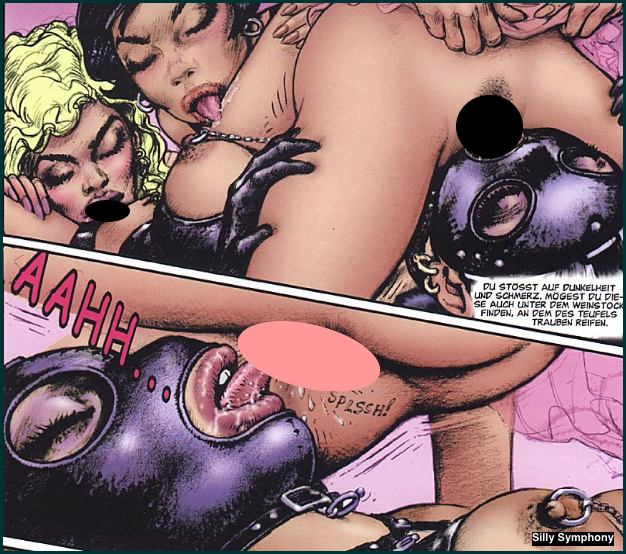
Seine erotischen Bild-Arrangements sind deutlich, ohne Tabus und fantasievoll in Szene gesetzt. The Young Witches Band 2 enthält explizite Sexpraktiken, das es wundert, das diese ungekürzt sogar in den USA veröffentlicht worden sind. "Fantasien mit Tieren"-Zensuren haben schließlich schon Alben von Manara, von Götha und Foxer erleiden müssen.
Der Stil von López mag vielleicht etwas antiquiert anmuten, aber seine letzten Alben von "The Young Witches" zeigen, das er seinen Zeichenstrich einer moderneren Sehweise anpassen kann.
Solano López verstarb am 12. August 2011 in Buenos Aires.
Links: |
 |
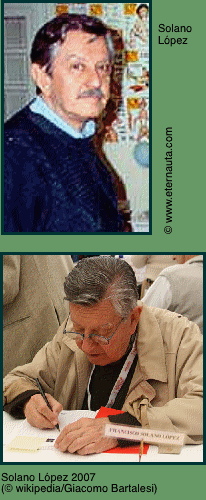
Francisco Solano Lopez
was undoubtedly one of the most important figures in the vast world of comics; and (despite starting late) a veteran master of erotic comics.
His works have been and continue to be published in countless countries, and thanks to him, many young talents have been given a chance in the cutthroat comic book industry.
López was born on October 26, 1928, in Buenos Aires. He created his first works for the Columba publishing house, such as "Perico y Guillerma". It was at Columba that he met his future partner and friend, Hector German Oesterheld. With Oesterheld as the writer, the first stories such as "Uma-Uma" and "Bull Rocket" were created. López later moved to the publishing house "Frontera", which was founded by Oesterheld.
The duo López and Oesterheld first gained significant attention with the El Eternauta stories. What was essentially a "simple" science fiction tale about alien invaders was, in fact, a clever allusion to and critique of the problems in their own country.
"El Eternauta" was first published in the magazine Hora Cero in September 1957. López’s excellent artwork and Oesterheld’s allegorical sci-fi story skillfully conveyed the daily problems - such as military dictatorship and social injustice - in Argentina as well as in neighboring Chile.
Very soon, the government took notice of the comic, and López was forced to flee to Spain. In Madrid, thanks to S.I. Studios Madrid, he was able to work for the English publisher Fleetway. At the end of 1959, he moved closer to his writers, who were based in London.
He created a wide variety of works for Fleetway. For example: "Galaxus: The Thing from Outer Space", "Pete's Pocket Army", "The Wizard of Football", "World Wide Wheelers" and "The Drowned World" for Buster. "Ozzie the Loan Arranger" and "The Louts of Liberty Hall" for Hot-Shot. "Janus Stark" for the magazines Smash and Valiant. "Kelly's Eye" for Knockout and Valiant. "Raven on the Wing" and "Kid Pharoah" for Valiant. "Dark Angel", "Toys of Doom" and "M.A.C.H. 1" for Eagle. "Gargan, The Fugitive from Planet Scror", "Britain AD 2170", "Sweeper Sam", "Stringbean and Hambone", "Adam Eterno", "Battler Britton" for Thriller Picture Library.
How could one man alone - in such a short time-draw so many comics? Well, he couldn’t. López didn’t take on so many projects without an ulterior motive. Due to the poor economic situation in his home country, many talented artists and fellow students lost their jobs. López provided them with work. Through his own studio in Buenos Aires, Ramiro Bujeiro, Tibor Horvath, Silvia Lechuca, the Schiaffino brothers, Nestor Morales, Julio, and Jorge - with whom López had worked on "Bull Rocket" in the early 1950s - found work again. López usually provided only the pencil drawings. "The studio" handled the inking and coloring for him.
In 1974, López returned to Argentina to resume working with his former publisher, Columba. However, his friend Oesterheld convinced him to work on the second part of "El Eternauta". That same year, he created the slightly erotic science fiction comic Slot Barr with writer Ricardo Barreiro. In 1976, his studio in Argentina mysteriously burned down. Among the items lost in the fire were twelve issues of "Slot Barr" and several drawings for "El Eternauta". López saw this as an opportunity to move back to Madrid. There, he negotiated with the Italian magazines LancioStory and Skorpio to publish his series "El Eternauta" and "Slot Barr".
In 1984, his work began appearing in American comic books (Dark Horse and Fantagraphics). He collaborated with Ricardo Barreiro on "El ministerio" and "El televisor", and with writer Carlos Sampayo on the police stories "Evaristo" for the Italian market. Other publications from this period include: "Razorguts" (again with Barreiro), "Burial of the Rats", "Corpses in Balance", and "Death Is Always Good" (France, 1985-86), as well as "Kidnapped" with Jim Woodring and Justin Green (1997-98).
Also notable is his successful adaptation of Tod Browning’s classic horror film "Freaks", created with Jim Woodring and published by Fantagraphics in the U.S. and El Víbora in Spain.
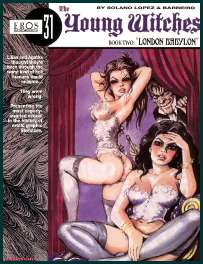
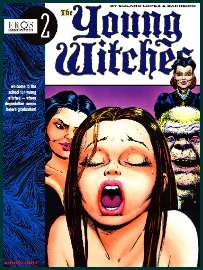
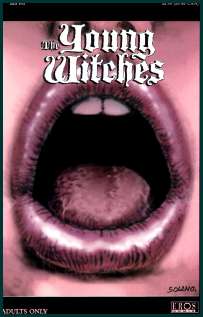
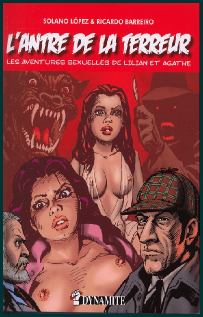
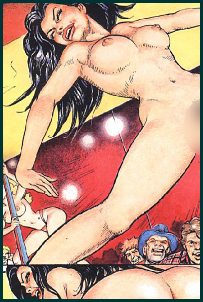
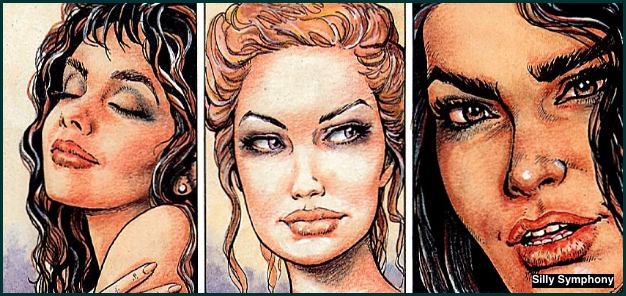
In the 1990s, López finally went "hardcore"! His greatest success in erotic comics was arguably the large-scale series The Young Witches, written by Ricardo Barreiro ("El Instituto" in Spanish and L’antre de la Terreur – Les aventures sexuelles de Lilian et Agathe in the French version). The series appeared in Spain and France in the magazine Kiss Comix and in the U.S. through Eros Comix, among other places. Eros Comix first published the series as individual issues and later compiled them into volumes. The subtitle of the second volume is "London Babylon." With "Empire of Sin" (Volume 3), López's art style changed as well. This was followed by "The Eternal Dream" (Volume 4) and "The Legacy" (Volume 5).
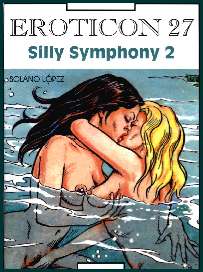
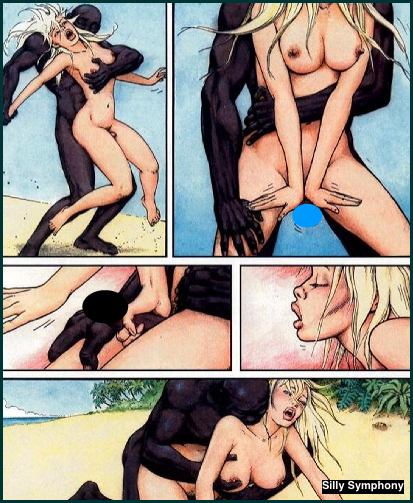
The "wordless comic" Sexy Symphony (published in German in the Eroticon series) was created in collaboration with López's son, Gabriel Solano.
In the wake of the popularity of "The Young Witches", Eros Comix also published his "Slot Barr" works under the name Peter Kock. However, the "Slot Barr" stories have nothing to do with "Hardcore". The Eros publications were merely tailored to "Hardcore" with explicit illustrations by López at the end of the issues.
A collection of erotic illustrations has been published under the title "Solano Lopez Sketchbook 100% Sex".
López received first prize for "Best Erotic Author" at the "Barcelona Erotic Salon", as well as the "Diario de Aviso Award" for "Best Realistic Illustrator".
The "Young Witches" series draws on López's extensive experience with style, anatomy, and layout. Added to this is the powerful storytelling of seasoned author R. Barreiro, who handed the series over to his colleague Pol starting with Volume 4. Set in the late 19th century, the story blends fictional and real-life celebrities of the time, such as Sigmund Freud, Sherlock Holmes, and "Jack the Ripper" (in Volume 2), with a thrilling tale about Lilian Cunnington, a half-witch who is admitted to a "witches' coven" boarding school (in Volume 1).
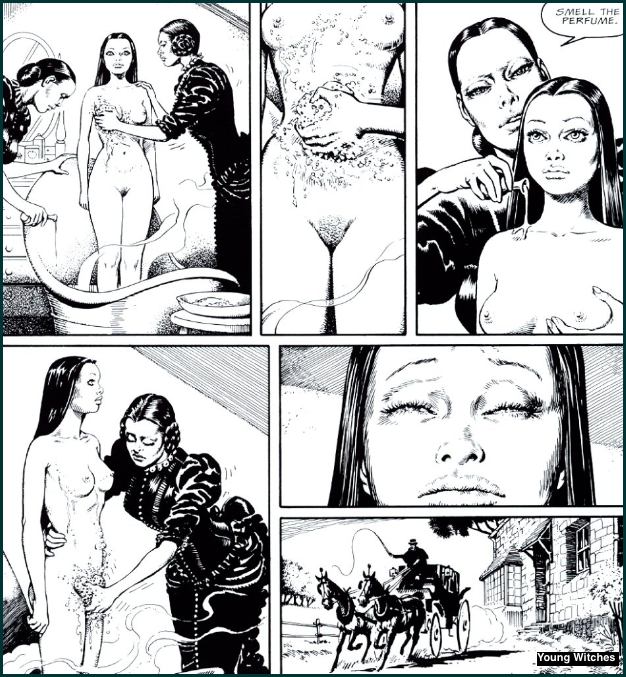
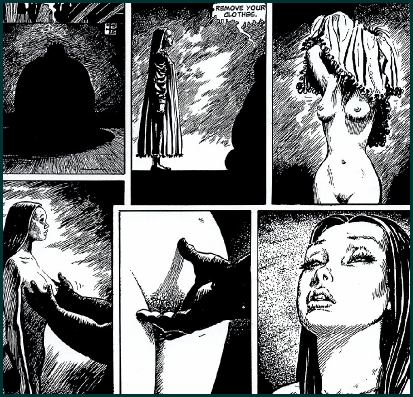
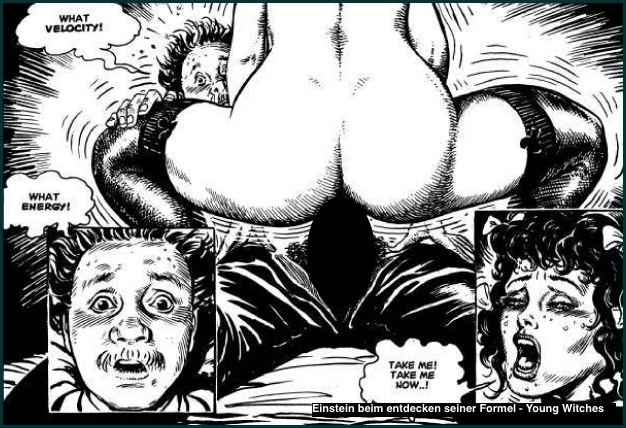
López's drawing style is influenced by the Argentine school and is comparable to the work of Georges Pichard, Paula Meadows, or Ignacio Noé. Even in black-and-white print, his pages shine with richness of detail, striking character design, and excellent panel layout without getting bogged down in halftone gray.
His erotic visual compositions are explicit, uninhibited, and imaginatively staged. "The Young Witches", Volume 2 contains graphic sexual content, so it's surprising that it was published unabridged, even in the U.S. After all, albums by Manara, Götha, and Foxer have already been censored for "animal fantasies".
Even in the French Kiss Comix offshoot La Poudre aux Reves, the "animal scenes" were censored. It wasn't until the 2010 Dynamite anthology L'antre de la Terreur that this flaw was rectified. This roughly 150-page volume collects the second part of the "Young Witches" series, published by Eros under the subtitle "London Babylon."
Although López's style may seem antiquated, his latest "The Young Witches" albums demonstrate his ability to adapt to a more modern aesthetic.
Even with an artist as skilled as López, you can see a noticeable improvement in the visual quality of “The Young Witches” from volume to volume. The series undergoes a "stylistic shift" from the "hard-edged" black-and-white drawings of the first two volumes to the more dynamic color layouts (printed in black and white by Eros-Comix) of volumes three through five. It’s no coincidence that The Young Witches is Eros-Comix's best-selling series, and it's certainly not the only reason it belongs in every good erotic comic collection!
R. Barreiros’s story and López’s artwork combine to create a thrilling, cohesive comic experience. It's even appealing to people who don't usually like or read "sex comics." You're missing out on a gem of a comic with stunning visual storytelling!
The series was also published in German as "Junge Hexen" by Schwarzer Turm (e.g., amazon.de). So far, only one volume has been released.
Solano López passed away on August 12, 2011, in Buenos Aires. |
||||||||
 |
||||||||||
 |
||||||||||
 |
||||||||||
 |
||||||||||
 |
||||||||||
 |
||||||||||
 |
||||||||||
|
|
|
|
|
|
|
|
|
|
|
 |
||
|
|
|
 |
||||
 |
||||
 |
||||
 |
||||
 |
||||
|
|
|
|
|
 |
||
|
|
|
 |
 |
|||
|
|
|
|
|
 |
||
|
|
|
 |
||
|
|
|
|
|
|